Desensitization Vol. 1
ENS Training and Early Development
Welcome back to HPG’s Dog Blog! I hope you’re finding the information provided here helpful to you and your furry friends. This month I’m going to begin discussing desensitization training. I’ve talked a bit about this in my previous post, Matting Mysteries Detangled. Dogs have areas of sensitivity that will need to be worked on whether it's at home during brushing and maintenance, a professional grooming session or a veterinary visit. Some of our pets react differently to these stimuli. Some dogs are not reactive to touch or auditory stimuli at all. Others recoil or snarl at their handler. This is an unusual response due to fear or sensitivity. In this article I’ll explain what to discuss with breeders about early development and handling. I also touch upon the importance of exposure to stimuli as it relates to your pet’s abilities to cope in stressful situations. This topic is not something that I believe is discussed enough. We should understand out pets on a base level. We need to know how they were handled and brought up during their early days of development so that we can properly care for them and prepare them for the world once we welcome them home.
Our pets have sensitive areas. I don’t know a dog who doesn’t have a spot they’d prefer I avoided. Sensitivities may be linked to past injury, poor handling as puppies, prior punishment, or anxiety due to lack of desensitization. This last cause seems to be the most common in my experience. Fear around strangers and being handled is often due to a lack of exposure. Puppies should be handled by their breeder prior to five weeks of age in order to ensure that their fear responses don’t develop around touch and humans in general. Early exposure to stimuli allows puppies to develop coping skills that are not otherwise inherent.
Early handling should begin when the puppy is three days old. As pet parents it’s vital that we do our research before making the decision to go with a certain breeder or adoption agency. If you’re looking to purchase a pup from a breeder; ask questions about their early development. The crucial window of socialization opens up at three days of age. Once this window of development opens up the little ones can be exposed to short periods of stimuli such as being held for short periods and exposing their feet and face to soft q-tips to activate stress responses for 3-5 seconds.These tactics are part of a five step training system known as the The Bio Sensor program; also referred to as the “Super Dog” program; which was created by the United States military to train service dogs such as mine detection dogs. They've created a series of exercises used to provide coping skills, boost neurological development, as well as improve cardiovascular and adrenal health, and encourage a stronger resistance to disease. According to the Veterinary Information Network; studies have proven that handling at an early age allows puppies to produce neurological stimulation that does not occur naturally. After years of research studies show that as puppies are not born with the ability to see, properly digest their food on their own, or differentiate between dangerous and innocuous noises; they need outside assistance.
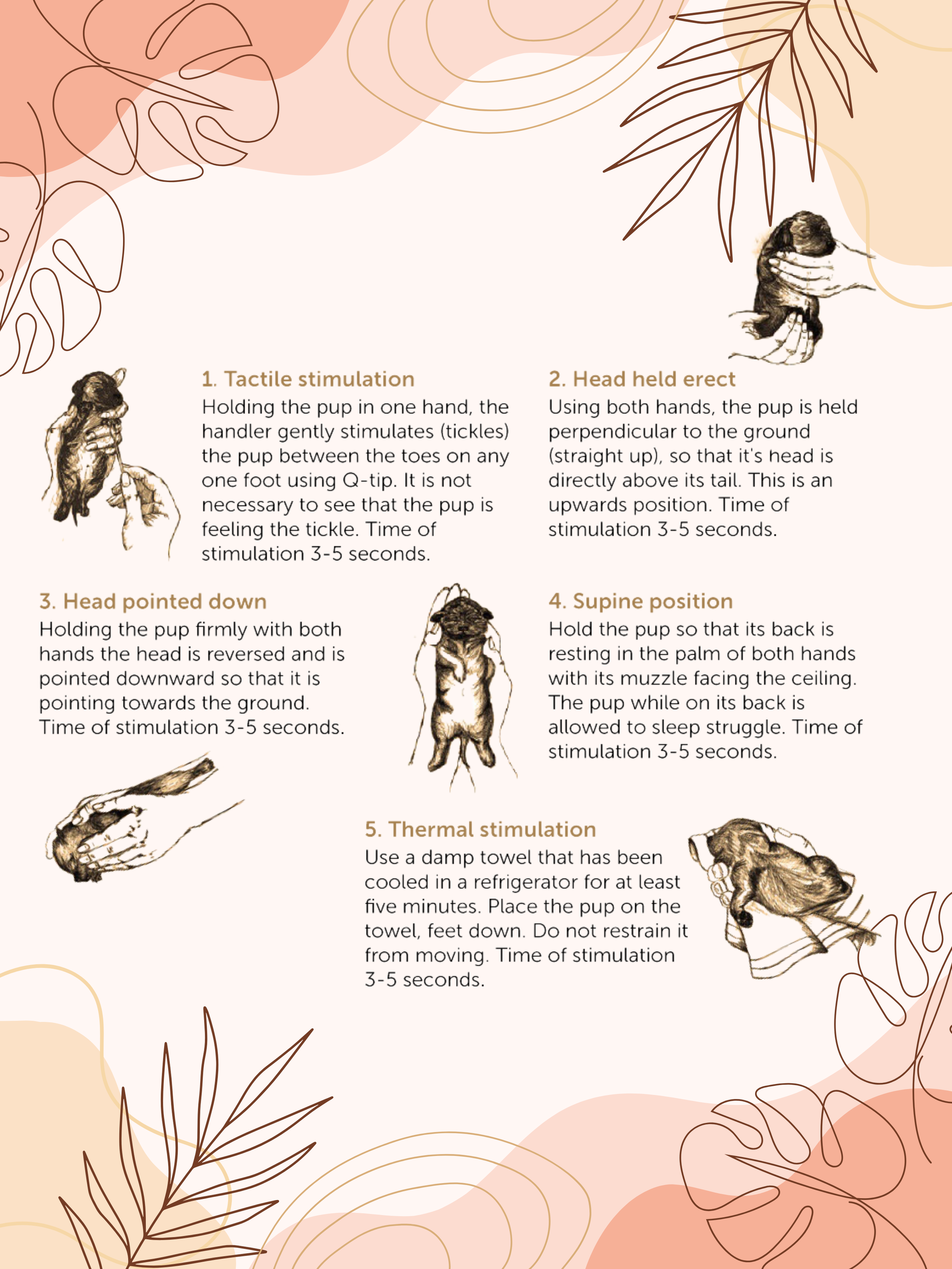
Early Neurological Stimulation i.e. The Bio Sensor Program
Puppies exposed to certain stimuli, such as that as the Bio Sensor Program, are better equipped to deal with stressful situations later in life. Stressful situations could include a loud blow dryer, strange objects in their face, or strange people touching their feet. Desensitization begins at three days but continues into adulthood as your pup navigates their way around different experiences and stimulation.
An exercise you can do at home to continue this work is playing with your puppies feet, face, and legs with a soft electric toothbrush. This will allow them to become familiar with sound, vibration, and touch sensations. Create safe environments when working with loud noises. Allow your pup to get used to the sound of your blow dryer at home. Auditory stimulation will teach them to reason whether something is a threat or if maybe it’s something they’ve already heard before and are therefore familiar with. Once our pets can decipher whether or not something is harmful they can make decisions for themselves based on confidence rather than fear.
The more exposure we allow our pets to experience; the better off they’ll be in situations that could cause them stress. We want them to be able to relax; especially during the grooming process. It’s supposed to be a spa day after all. This discussion will continue as we move along through our grooming education journey together. I’m always furthering my education on animal behavior along with new grooming techniques and grooming health. It’s vital that we do our research and continue learning about our pets and their care in order to ensure that they get to live their best lives. The life a dog deserves. Thank you so much for checking out this issue of HPG Dog Blog. Thank you for your patience as well as this is a little late coming out. See you in the salon during your grooming appointment or maybe for a Chat and a Treat!
xo Britt